Friday, July 21, 2006

Herpes Ocular Imagenes
1997
 Under the same general parameters of the first edition, Venice Biennale II was developed in the same space, the community hall of Venice, but with artists most widely recognized in the national art world, who wanted to appropriate the urban space. Thus, a high percentage of works were carried out in the park, shops, houses and all sorts of different alternative spaces Local Hall in principle, had a totally museum.
The Biennial interest in the media, is justified by the level of the participants and the resourcefulness of the proposals. The works of local artists, on the other hand, were contrasted with the works of artists of proven track record, this feature led to the Biennial to think about how to qualify these works and processes, which would operate more to front.
 Unlike the first edition, where participation it was considered a prize, the second edition five proposals awarded by popular vote through a ballot arranged in the entrance hall.
This time the IDCT and others supported the event as well, companies became interested in the event and then back him on several occasions. Local trade was interested in the same way and with its approach we not only support but also the confidence of the community for the Biennial.
The Biennial, which was raised at the outset as something possible, but over time took a procedural nature. The artists and the artistic environment, increasingly concerned, were already talking about a third edition. The event grew and the problems too, because given the new dimensions of the event, initial support was increasingly emerging, therefore, resources management became one of the most important points on the agenda of the Venice Biennale . PARTICIPANTS
1. Andrea Echeverri / DON ALVARO MORENO
2. GUSTAVO ZALAMEA
3. MARIA ANGELICA MEDINA
4. LUCAS OSPINA 5. JUAN VELASCO FRANCISCO 6. CARLOS BLANCO
7. CARLOS SALAS
8. ALBERTO Baraya
9. RAFAEL ORTIZ
10. JAIME Iregui / MARIA ELVIRA Escallon
11. JIMENEZ FREDDIE
12. MARIA FERNANDA ZULUAGA
13. JOSEPH KAPLAN
14. GUSTAVO MUÑOZ
15. LUZ ANGELA LIZARAZO
16. CARLOS JACANAMIJOY
17. MANUEL ROMERO
18.
JARAMILLO GLORIA 19. GABRIEL SILVA
20. MARTHA Combariza
21. ANA MARIA RUEDA
22. FERNANDO LUIS ROLDAN
23. OMAR CROWE
24. Nadin Ospina
25. LUIS HERNANDO GIRALDO
26. ROMERO MANUEL OCHOA
27. CARLOS ZAMUDIO
28. RAFAEL GUTIERREZ
SOME PICTURES
Work of Martha Combariza
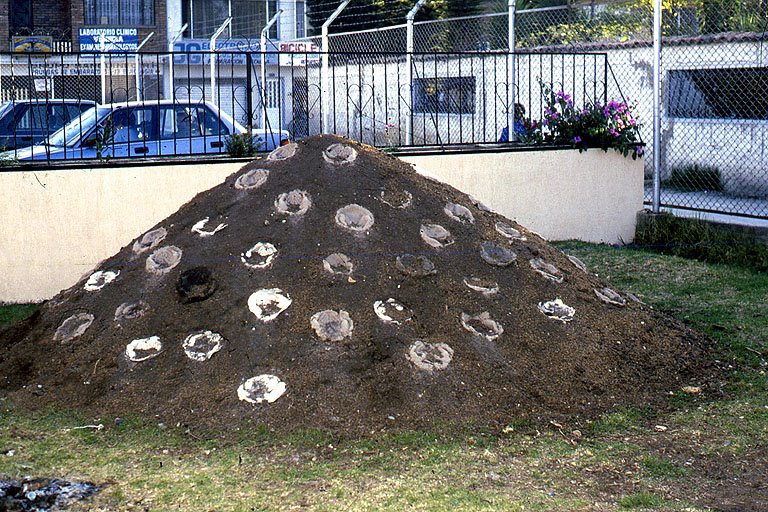 Work of Juan Francisco Velasco

Work of Alberto Baraya
What Adhesive Will Stick To Neoprene
1995
 The Venice Biennale I arose at a particular moment in art Bogota, where both official languages, as well as contemporary art spaces were worn, repetitive, and some foreign sobrepolitizados.
The initial approach was to displace the art of the official or common areas to other less established or willing, to gather new audiences and force some of the process of each artist, faced with a specific context. Having to relate their work with audiences who will read it later allowed a number of approaches between author-viewer-context that triggered new strategies of interaction between them.
 sarcasm and paradox, as a result of mimetic reflection raised the Biennial with his Italian counterpart, La Biennale Di Venezia, became effective early on advertising hook for the media attending the event en masse. The impact was such that although many in the art world were not present at the event, remained aware of their day to day development, through articles and interviews from many angles recorded consistently performing the Biennial.
La Biennale invited from the beginning to artists residing in the town, to show their work in this space because, for obvious reasons are the ones who can bring more precision to the reality of the neighborhood to live in it for years. Other artists, some other guests invited by the organizers allowed the coexistence of different looks, different ways of approaching the area and different processes of creation.
artists give back the valuable support of the people through educational activities such as conferences, workshops and guided tours, which are made available in public facilities during the Venice Biennale exhibition. These activities are generally aimed at children and young people sector or the elderly. PARTICIPANTS
1. ANTONIO CARO
2. MARIA ANGELICA MEDINA
3. JAVIER ALMANZA
4. PILAR ASILAH 5. JAIME AVILA 6. COSTANZA CAMELO
7. MAURITIUS CALIXTO
8. Jaime Ceron
9. Gilles Charalambos
10. Diaz & Juan Mejia WILLSON
11. Andrea Echeverri
12. ESPINOZA LINA
13. OLGA LUCIA GARCIA
14. MIGUEL ANGEL HUERTAS
15. IBARRA SILVIA
16. RUSH HUMBERTO
17. MARTÍNEZ GERMÁN
18. CARLOS MERY
19. DARIO RAMIREZ
20. TEDDY RAMIREZ
21. ERNESTO REYES
22. ROJAS MIGUEL SOTELO
23. MANUEL ROMERO
24. ROBERTO SARMIENTO
25. & The flasks
SOME PICTURES
Collective Work RADIO ZERO
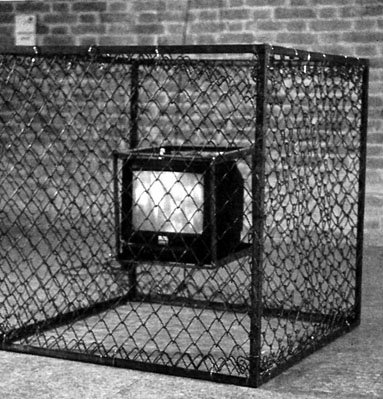 Willson Artwork Diaz and Juan Mejia
Firefighter Fish Tanks

The Venice Biennial of Bogotá 

Objective: To spread or move the art production and circulation from usual places from STIs and to a popular southern neighborhood in Bogota, far from the historical district and the official places Where Art exhibits take place.
Strategies: To make an In Situ art exhibition by young professional artists Emerging Who Simultaneously do art workshops and conferences about their work or any contemporaneous artwork for the community.
Initiative
: The biennial is part of a neighborhood’s habitual events, to promote creativity and discuss critical elements, to appreciate, experiment, and evaluate art projects and their relation with the community.
Final Initiative
: To create a physical and a mental space, to reflect about the contemporary thought, through art as the communication life media.
Preamble
In 1995 the biennial aroused as the possibility to spread art to new spaces and new audiences. The biennial could be seen as a movie interlude, as an open enunciate, a multidisciplinary lab or work in progress.
This event started as a word game which refers to the Venice, Italy biennial. It differs from its European references, it shows a different type of relationship with the spectators, tries to involve them in an active creative process and work exhibit.
The Venice Biennial of Bogotá is far from being a simple autobiographic artwork sampler or an everyday gallery or museum exhibition, it is an event that took the neighborhood as a basic theme, spread out today to the Tunjuelito location south of Bogotá. As time has gone by, it has become a window for contemporary art and its relationship with the local everyday neighborhood and urban activities.
This is not new. What it is noticeable about it is perhaps the community’s growing participation as well as making the artwork and their active collaboration in the workshops, speeches, and guided visits.
The In Situ character of the biennial has made sense for the biennial itself as well as the art projects.
Justification
The Venice Biennial of Bogotá (BVB) takes place because it is considered that through art expressions, pedagogical processes are developed from the community so that the neighborhood starts acquiring symbolic-cultural spaces. In this new context, the potential expressions and the cultural practice could develop from its insights.
Mission
The Venice Biennial of Bogotá (BVB) looks forward for the community and the artists to come closer together through a pedagogic strategy that takes art as its activity and articulates it in the neighborhood context.
When we talk in the framework of the biennial about pedagogy, we understand it as the space where a variety of knowledge circulates around art, its role, and its audiences.
The BVB tries to support and look for their own community to transform their ways of life, by way of exploring new everyday interpretation elements, new reading references, and experiencing their relationship with urban space, their neighborhood and themselves.
The BVB looks to contribute with new elements and strategies. The effort that has been done from different social, public, professional and academic areas to keep up-to-date new concepts and community practices.
For the artists, it means a different compromise with the consequences that their art work may cause, since the biennial proposes searching for “other” solutions, conditions, and action fields for their projects in a unique scenery: the neighborhood.
A little history…
The Venice Biennial of Bogotá (BVB) started in 1995 because of difficulties found by young national artists to have access to important exhibits worldwide. The group of “Graggers”, conformed by Plastic Art students from the Universidad Nacional de Colombia, decided to open their own space with wide community support in the Venice neighborhood, a popular area of Bogotá. That is how the First Venice Biennial of Bogotá took place.
This first version used the image and concepts from the Venice Biennial of Italy, framed in our own cultural environment. The BVB started around a universal reference appropriation, and at the same time, it ratifies our own local culture.
The second Venice Biennial of Bogotá, D.C. continued with the same reference strategies from the Venice Italy Biennial, but the projects, contents and audiences were different. While the Venice, Italy Biennial is directed to one international plastic and social elite. The second Venice Biennial of Bogotá was the result of reducing the distance between the community of a popular neighborhood and the art manifestations. This approach was developed in two ways. In one way the community approached the plastic expressions that were banned or did not belong to them, and on the other hand, twenty (20) or more, highly renowned artists from Colombia approached a specific area of our city, to interpret local reality and to return to the community their impressions as plastic expressions. The BVB will always emphasize the interaction between art with the community and their art projects, which should be inspired by the social, economic and cultural realities of our Venice.
From the third edition of the Venice of Bogotá Biennial, many proposals came about from international artists that adhere to the BVB philosophy such proposals sometimes from a foreign point of view, broaden out situations that for us locally were already known and invisible (not there).
Ever since the BVB was created, it has been part of highly important academic events in many cities around the world. Those are Medellin, Cali, Caracas, Madrid, La Habana, London, Liverpool, Buenos Aires, Quito and Cardiff.
About the summons
This Biennial differs from the former ones before a personal invitation was sent to each participant. Ever since the third Biennial, the invitation has been made through a letter of convocation, open to all and distributed through the mail, electronic media and print outs using the databases from different academies, universities, cultural and community centers. The Local Cultural Council and other cultural foundations that are on location putting out a list of possible participants decide the local artist’s participation.
The experiment is about allowing and maintaining contrasts between local artists, and the artists that emerge from the summons. Both are referred to the community in a diverse way: through documental approaches, position enunciations, personal and sometimes even public lectures facing the Venice neighborhood context.
About the artists
It is very curious to see, how in a particular way the artwork of an artist changes in a non “habitual” area.
Having a far away neighborhood from the classical art circles as a reference can expose the artist to new spectators, and lectures. Because their artwork is collective, and it cannot be evaluated immediately, it gives them less personal responsibility. It is something that is perceived as time passes and then makes an impact.
On the fourth edition of the BVB, foreign artists that belonged to the Nexus project participated through the Convenio Andres Bello. Thanks to the exchange program they were able to visit the neighborhood previously. These artists lived in Bogotá for about a month. Starting from their own experience in the Venice neighborhood they made their artwork. As well as some international artists, they will have the same approaching process to the neighborhood before they make of their work in future editions of the Biennial.
The plastic value
The Biennial acts as an information channel, in which experiences are exchanged; the art in such case shows evidence of particular behaviors that affect individuals in this context; or simply highlights similarities and brings up a difference, which many times paradoxically is the one excuse to get together.
The artwork or better yet the projects start assuming compromise in each and every participant. The risk is reduced to the access to documentation and the exhibit level that the participants have had in the context. The codes pile up to say things, to translate realities. What are left are the results, which are in the eye of the beholder who “feels” or does not feel. The artwork approaches to the neighborhood reality, and the abilities of the artist and its good judgments.
About the audiences
After seeing many modernist museums and art galleries, organized under chronological or stylist parameters, between the lines something can be seen that could be the first justification; the museum didactic aspect.
From the Biennial’s first version, the neighborhood people participation was looked for; speeches, conferences, guided visits that in a way or another approaches surprisingly the spectators that have a global idea about art, or at least of what a sacred and impermeable museum is.
Today the Biennial of Venice continues with its didactical intention trying little by little to optimize the processes, and to call upon the intervention of people specialized in this area.
New projects emerging from the BVB
The Venice Biennial has been the inspiration and the motor of many private artistic initiatives as well as official ones for more than ten (10) years in Bogotá. As a matter of fact, new art practices have changed the way they saw the far away communities, centering themselves in their cultural potential and their abilities to convert such practices in creation, tolerance strategies.
Inside this context the biennial has created two “extensions” that surely optimize from its central axis the new versions, and that will give the needed tools for it sustainability: “Linking communities through the Arts” and the Piccolo Aperto.
Linking communities through the arts
The basic intention is to offer and execute a series of experiences in a particular place with a determined group of people to create links, optimize processes, bring communities together, increase tolerance and promote team work, all these through art.
In general the process includes a series of projects, independently stated, yet related and interactive. Looking in that way to create an activity “kit”, that could be transported to other contexts and shown to other audiences, enriched and continue this versatile nomad strategy.
With these ideas, more than 500 didactic activities have taken place during 10 years of the Venice Biennial of Bogotá, the implementation of a stable and active center near the neighborhood’s Communal Room will be proposed.
The training of local leaders for different activities is applied accordingly to their particular needs and they take place at the appropriate moment. We look forward to build an artist’s database as well as agents, leaders, and general public to generate a useful system and constantly keep it up-to-date.
Planning, making, and evaluating this project will be in charge of TÄI – The Art Incubator, a multidisciplinary collective that is in charge of the logistics of the Venice of Bogotá Biennial.
The Piccolo Aperto
This events objective is the presentation interesting art proposals from all over the world that go along with the independent and urban philosophy of the Venice of Bogotá Biennial. These proposals have a relationship with the urban side, the living in the city dynamics and the images of a neighborhood, we consider inviting similar proposals to enrich and broaden the strategies, to state other ways to make art having those as a reference.
We would like to bring into the country modern proposals; interesting and inspiring that promote a similar setting up as to the one of our context. At the same time it will allow the artists, agents, administrators, sponsors, partners, gallery owners and spectators interaction closing the existing gap between contemporary art and its audience.
A year ahead of time of each Venice Biennial or in the time when its effective, a version of the Piccolo Aperto will take place; it will involve international artists (not necessarily from the invited honor country) artists or artists collectives from other cities of the country.
This event will have two locations. One will be the Location of Tunjuelito and the other one will be a regular exhibition centre to achieve the interaction from both ends of the system in one way.
Vision
The work will be done looking forward to strengthen local cultural projects that are already in progress. The objective is to make the local artists have active and dynamic participation in this art spaces, filling them with every day activities. That way we will be getting closer to their entertaining or information interests or simply we will be establishing links with the community from different perspectives.
It is a goal for years to come that the Biennial of Venice becomes the favorite spot for artists to develop themselves as well as cultural agents who will be in charge of promoting and broadcasting the event in the not too far away future.
© 2006 / Franklin Aguirre / Bogotá, D.C. Colombia
Subscribe to:
Posts (Atom)